Called 311 About Mosquitoes? Here's What Miami-Dade County Actually Does (And What They Don't)
Called 311 About Mosquitoes? Here's What Miami-Dade County Actually Does (And What They Don't)
By Mosquito Miami | March 28, 2026
It's 7 PM on a Saturday in June. You're trying to grill some burgers in your backyard in Kendall, and you can't stand outside for more than 30 seconds without getting swarmed. You've had enough. So you grab your phone and call 311 to file a Miami 311 mosquito complaint, because that's what everyone says to do.
And honestly? That's not a bad first move. Miami-Dade County runs one of the most well-funded mosquito control programs in the country. It's free, it's tax-funded, and the people who work there know what they're doing.
But here's the thing most homeowners don't realize until after they've filed that complaint: what the county does and what you probably expect them to do are two very different things.
This guide breaks down exactly what happens when you call 311 for mosquito control in Miami-Dade, step by step. Then it covers what professional mosquito control companies do differently. No sales pitch, no spin. Just the facts so you can decide what makes sense for your situation and your budget.
How to File a Miami 311 Mosquito Complaint
Filing a complaint is easy. There are three ways to do it:
- Call 311 from any phone in Miami-Dade County
- Go online through the 311Direct website
- Use the 311 mobile app on your phone
You'll provide your address, describe the issue (mosquitoes breeding, standing water, swarms of adult mosquitoes, etc.), and then you wait. The county logs your complaint and adds it to the queue.
So far, so good. But this is where most people's expectations start to diverge from reality.
What Actually Happens After You File a 311 Mosquito Complaint
After you submit your complaint, here's the actual process:
Step 1: An Inspector Gets Assigned
Miami-Dade mosquito control dispatches an inspector to your property. The standard timeline is within 5 business days. But if you're filing during peak mosquito season (May through October), which is exactly when most people file, it can take longer. Sometimes significantly longer.
Think about it: when mosquitoes are at their worst, that's when everyone is calling. The system gets backed up.
Step 2: The Inspector Checks for Breeding Sites
When the inspector arrives, they walk your property looking for one specific thing: containers holding standing water with mosquito larvae. Old tires, plant saucers, buckets, clogged gutters, birdbaths, that random wheelbarrow you forgot about. Anything that collects water and sits long enough for mosquito eggs to hatch.
This is actually the most important part of Miami-Dade mosquito control. Mosquitoes need standing water to breed, and eliminating those sources is the single most effective long-term strategy. The county knows this, and it's where they focus their energy.
Step 3: They Remove the Water Source
If the inspector finds breeding sites, they dump the water out. That's the primary intervention. They tip containers, drain standing water, and remove the breeding habitat.
For larger water sources that can't just be tipped over, like an abandoned swimming pool or a decorative pond, the county may treat the water with insecticide. In some cases, they'll introduce Gambusia fish (mosquitofish) that eat mosquito larvae. That's a pretty clever solution for permanent water features.
Step 4: Maybe They Spray. Maybe.
Here's where the biggest misconception lives. Most people who file a Miami 311 mosquito complaint expect someone to show up and spray their yard. It doesn't usually work that way.
If the inspector happens to encounter adult mosquitoes during the inspection, they may use portable spray equipment to treat the immediate area. But that's at their discretion, based on what they observe during the visit. It's not guaranteed, and it's not the primary purpose of the inspection.
The inspector's job is source reduction: find where mosquitoes are breeding and eliminate it. Spraying adult mosquitoes is secondary.
The Truck Spraying Question: Why You Can't Request It
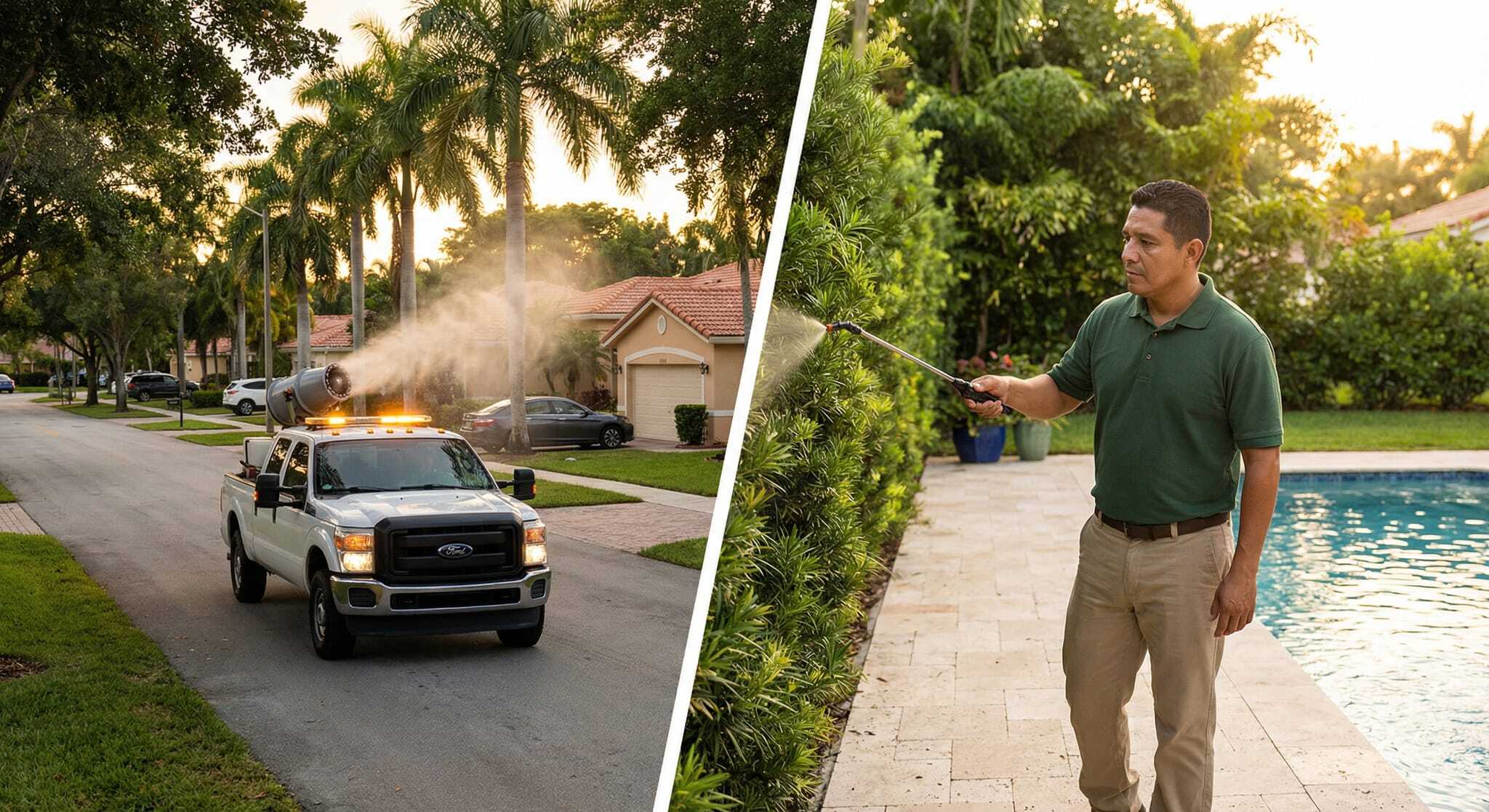
This is the number one thing homeowners don't understand about county mosquito spraying in Miami. Those mosquito spray trucks that drive through neighborhoods at night? You cannot request them. Filing a 311 complaint does not trigger a truck to come spray your street.
Truck spray routes are determined entirely by surveillance data. Miami-Dade County operates over 320 mosquito traps across the county. These traps collect mosquitoes, and the data tells the county where mosquito populations are spiking. When trap counts cross certain thresholds in a specific zone, that zone gets added to the truck spray route.
The spraying happens overnight, typically using a combination of Bti (Bacillus thuringiensis israelensis), which is an organic larvicide made from naturally occurring soil bacteria, and an adulticide to kill flying mosquitoes. Bti is non-toxic to humans, pets, and most other insects. It specifically targets mosquito and black fly larvae. It's good stuff, and the county has been using it effectively for years.
But here's the catch: the truck spray schedule gets posted on the county's social media accounts (Facebook and Twitter) the afternoon before they spray. That's your only notice. You have zero control over when or if the truck comes to your neighborhood. It could be tonight. It could be never, if your area's trap numbers don't warrant it.
What 311 Mosquito Control Does NOT Do
To be fair, 311 and Miami-Dade mosquito control never claimed to do any of these things. But most homeowners assume they will, so it's worth spelling out:
- They don't treat your yard on a recurring schedule. The inspection is a one-time visit in response to your complaint. They're not coming back every few weeks.
- They don't guarantee results. They'll address breeding sites they find, but if your neighbor's yard is a mosquito factory, or if new rain creates fresh breeding sites the next day, you're back to square one.
- They don't apply residual treatments. Whatever they do during the inspection visit has no lasting protective effect on your property. There's no barrier spray, no long-term treatment left behind.
- They won't come back to check. It's reactive, not proactive. You'd have to file another complaint to get another inspection.
- They won't spray your yard for a party or event. County mosquito control is a public health service, not an on-demand service for your backyard BBQ.
None of this is a criticism of the program. Miami-Dade runs a solid operation that protects public health across a massive county. But public health mosquito control and backyard comfort are two different goals, and the county is focused on the first one.
What Professional Mosquito Control Companies Do Differently
Professional mosquito control takes a completely different approach. Instead of responding to a complaint after the problem is already bad, top-rated local companies operate on a proactive, scheduled model designed to keep your specific property comfortable all season long.
Here's how it typically works:
Scheduled Barrier Spray Treatments
The foundation of professional mosquito control is the barrier spray, applied to your property every 21 days throughout mosquito season. A licensed technician treats your property's perimeter, landscaping, shaded areas, under eaves, around patios, and anywhere mosquitoes like to rest during the day.
The products used are residual, meaning they keep working between visits. When mosquitoes land on treated surfaces (and they will, because mosquitoes rest on foliage and shaded structures throughout the day), the treatment eliminates them. This creates a protective barrier around your outdoor living space.
Proactive, Not Reactive
Good mosquito control companies start treatments before peak season hits. Instead of waiting until you're miserable in June and then playing catch-up, they begin treating in early spring to knock down mosquito populations before they explode. Treatments continue through the entire season, maintaining that barrier consistently.
This proactive approach is fundamentally different from the 311 model. The county responds after you have a problem. Professional services prevent the problem from developing in the first place.
Guaranteed Results
Most reputable mosquito control companies guarantee their work. If mosquitoes come back between scheduled treatments, they'll re-treat your property for free. That's a level of accountability that simply doesn't exist with a 311 complaint.
It also means the company is incentivized to do thorough work the first time. A callback costs them time and money, so they're motivated to get it right.
Your Property, Your Schedule
Professional technicians get to know your specific property over time. They learn where the problem spots are, which areas need extra attention, and how your landscaping affects mosquito behavior. That institutional knowledge makes each treatment more effective than the last.
Treatments can also be timed around your schedule. Having a backyard wedding? A graduation party? A quiet Sunday afternoon where you just want to sit outside without getting eaten alive? Top-rated local companies offer event treatments specifically for situations like these.
Misting Systems for 24/7 Protection
For homeowners who want maximum protection, professional companies also install automated misting systems. These systems release a fine mist of mosquito control product at timed intervals (usually dawn and dusk, when mosquitoes are most active) throughout your property. It's essentially autopilot mosquito control.
Misting systems are a bigger upfront investment, but for families who spend a lot of time outdoors or have properties near canals, lakes, or mangroves, they can be a game-changer.
311 vs. Professional Mosquito Control: Side-by-Side Comparison
| Feature | Miami-Dade 311 | Professional Company |
|---|---|---|
| Cost | Free (tax-funded) | $49-$100 per treatment |
| Response Time | ~5 business days (longer in peak season) | Scheduled at your convenience |
| What They Do | Inspect for standing water, dump containers, possible spot spray | Full barrier spray of yard, perimeter, landscaping, shaded areas |
| Recurring Visits | No. One-time response per complaint | Yes. Every 21 days throughout season |
| Residual Protection | None | Yes, products keep working between visits |
| Truck Spraying | Based on trap data only, cannot be requested | N/A (targeted yard treatment instead) |
| Guarantee | No | Yes, most companies re-treat for free |
| Event Treatments | No | Yes, for parties, weddings, BBQs |
| Approach | Reactive (responds after complaint) | Proactive (prevents problems before they start) |
| Misting Systems | No | Yes, 24/7 automated protection available |
| Knows Your Property | No (different inspector each time) | Yes, same technician learns your yard |
So Which One Should You Use?
Honestly? Both have their place, and they're not mutually exclusive.
Use 311 when:
- You notice a specific breeding site you can't handle yourself (like a neighbor's abandoned pool or an overgrown vacant lot)
- You want the county to be aware of a mosquito problem in your area so it shows up in their data
- You're on a tight budget and need the free option
- There's a public health concern (like a known mosquito-borne illness in your zip code)
Consider hiring a professional when:
- You want to actually enjoy your backyard consistently from spring through fall
- You have kids or pets who play outside daily
- You entertain outdoors regularly
- Your property is near standing water (canals, lakes, retention ponds, swales)
- You've tried 311 before and the problem came right back
- You want guaranteed, scheduled, proactive protection
A lot of Miami homeowners actually do both. They file 311 complaints for neighborhood-level issues (vacant lots, abandoned properties, drainage problems) while also paying for professional treatment on their own property. That's a smart combination.
The Real Cost Breakdown
Let's talk money for a second, because "free" is appealing but context matters.
County mosquito control through 311 costs nothing out of pocket. You're already paying for it through your taxes, so you might as well use it when appropriate.
Professional mosquito control typically runs between $49 and $100 per treatment, depending on yard size. With treatments every 21 days from roughly April through October, that's about 8 to 9 treatments per season. For a typical Miami yard, you're looking at roughly $400 to $900 for the entire season.
Is that worth it? That depends on how much time you spend outside and how much mosquitoes affect your quality of life. For a family that grills, has a pool, or just likes sitting on the patio in the evening, it's a pretty straightforward value proposition. For someone who mostly stays inside, maybe not.
The math also changes if you're dealing with a mosquito-borne illness risk. South Florida has seen local transmission of dengue, Zika, and chikungunya in recent years. If you're in an area where those diseases pop up, professional mosquito control starts looking less like a luxury and more like basic prevention.
Tips for Getting the Most Out of 311
If you decide to go the 311 route, here are some ways to make it more effective:
- Be specific in your complaint. Don't just say "there are mosquitoes." Mention standing water locations, time of day when mosquitoes are worst, and whether you've noticed larvae in any water sources. The more detail you provide, the more useful the inspection will be.
- Do your own source reduction first. Walk your property and dump any standing water you find before the inspector even arrives. The fewer small breeding sites the inspector has to deal with, the more time they can spend on the issues you can't solve yourself.
- File complaints about neighboring properties too. If the vacant lot next door is a mosquito breeding ground, file a separate complaint about that address. Mosquito control can inspect properties even if the owner hasn't complained.
- Follow up if nothing happens. If a week goes by with no inspection, call 311 again. Complaints can get lost in the system, especially during peak season.
- Check the truck spray schedule. Follow Miami-Dade Mosquito Control on social media so you know when truck spraying is happening near you. If they're spraying your area, leave windows open slightly or spend time outside the next morning to benefit from the reduced mosquito population.
Tips for Choosing a Professional Mosquito Control Company
If you decide to go the professional route, don't just pick the first company that pops up on Google. Here are some things to look for:
- Licensed and insured. Florida requires pest control companies to be licensed. Verify it.
- Satisfaction guarantee. Any company worth hiring will offer free re-treatments if mosquitoes come back between scheduled visits.
- Transparent pricing. Get a clear quote based on your yard size before committing. Avoid companies that won't give you a price until after an inspection.
- Good reviews from local homeowners. Check Google reviews, Yelp, and Nextdoor. Look for companies with consistent positive feedback specifically in the Miami-Dade area.
- Clear explanation of what they use. A good technician should be able to tell you exactly what products they're applying and why.
For a list of vetted, top-rated mosquito control companies serving Miami-Dade, check the directory on this site.
Bottom Line
Calling 311 about mosquitoes in Miami-Dade is a perfectly reasonable thing to do. The county runs a legitimate operation backed by science, staffed by trained professionals, and funded by your tax dollars. Use it.
But go in with realistic expectations. The county's job is public health mosquito control across 2,400 square miles. Their job is not to make your specific backyard comfortable for your Saturday cookout. Those are different missions that require different approaches.
If you want your property specifically treated on a regular schedule with guaranteed results, that's what professional mosquito control companies exist for. It costs money, but for many Miami families, it's the difference between dreading mosquito season and actually enjoying their outdoor space.
The smartest approach? Use both. Let the county handle the big-picture surveillance and neighborhood-level interventions. Let a professional handle your yard. Between the two, you'll have the best mosquito protection available in Miami-Dade County.
