No-see-ums in Miami: what they are and how to stop them
If you've ever been outside at dusk in Coconut Grove or Key Biscayne and felt tiny pinpricks all over your ankles and arms but couldn't see what was biting you, you've met Miami's no-see-ums. They're barely visible, incredibly annoying, and their bites itch worse than mosquito bites for most people.
No-see-ums (also called biting midges or sand flies) are a fact of life in South Florida. They're not going anywhere. But understanding when they're active, where they breed, and what actually works to control them can make a real difference in whether you can enjoy your yard after 4pm.
What no-see-ums actually are
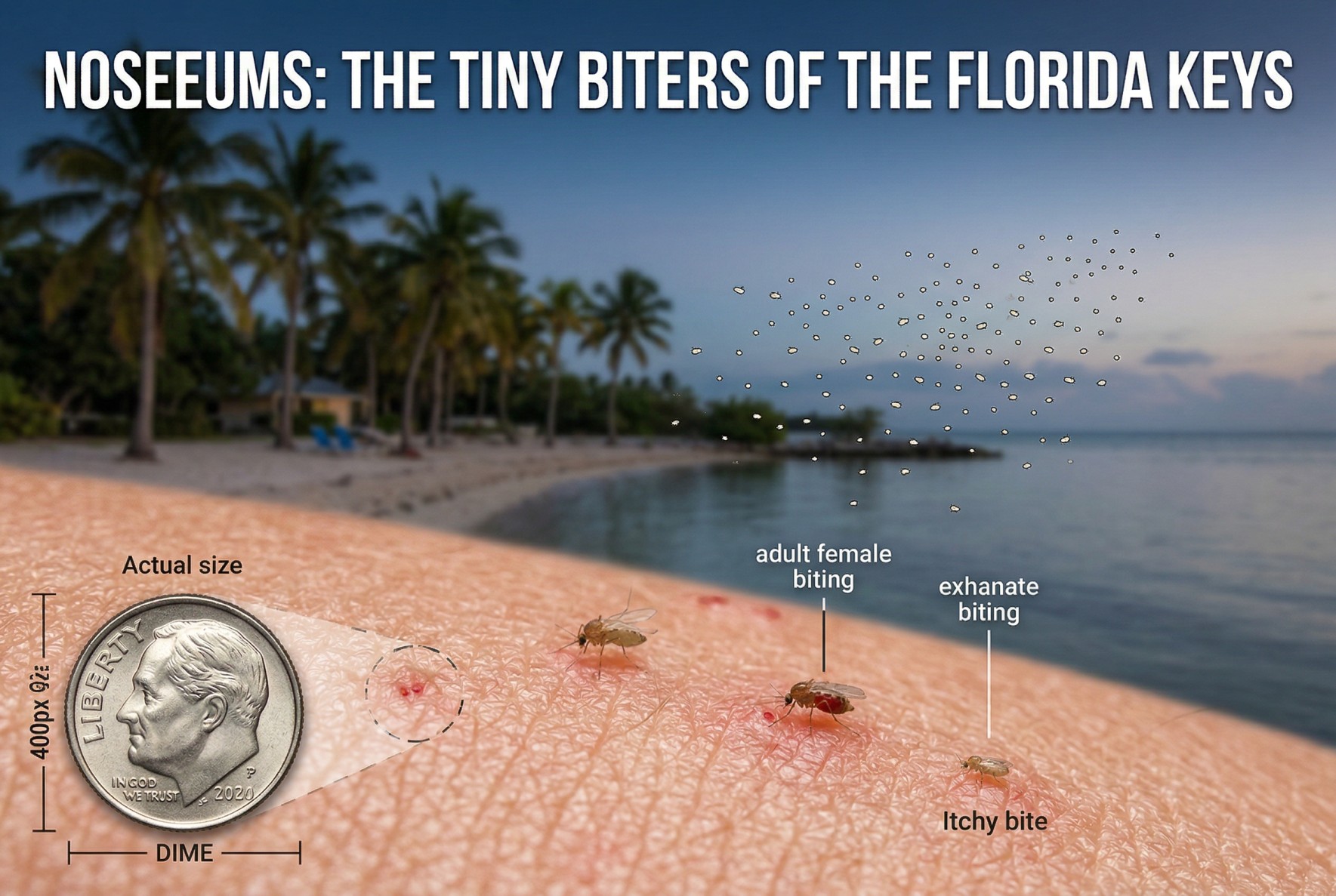
No-see-ums are tiny biting flies in the Ceratopogonidae family. The most common species in Miami is Culicoides furens. Adults are about 1 to 3 millimeters long, small enough to pass through standard window screens. Only the females bite. Like mosquitoes, they need blood to produce eggs.
Their size is what makes them so frustrating. You can't see them coming. You just feel the bite, look down, and see nothing. By the time you notice the itchy welt forming, the no-see-um is long gone.
When they're worst in Miami
No-see-um season in South Florida runs roughly from March through October, with peak activity during the warmest, most humid months. But unlike mosquitoes, no-see-ums have very specific activity patterns.
They're most active at dawn and dusk. These low-light periods are when females come out to feed. On overcast, humid days, they can be active all day long. Wind is their weakness. Anything over about 5 mph keeps them grounded, which is why breezy days feel so much better and why screened patios exist.
Waterfront properties in Key Biscayne, Brickell, and Coconut Grove tend to have the worst no-see-um problems. Mangrove areas and tidal flats are prime breeding habitat. Properties near canals in Coral Gables and Pinecrest can also see heavy activity after rain.
Why DIY methods fall short
Citronella candles, tiki torches, and bug zappers do almost nothing against no-see-ums. Their tiny size means most bug zappers miss them entirely, and citronella smoke dissipates too quickly in any breeze to create a meaningful barrier.
DEET-based repellents applied directly to skin do help, but reapplying repellent every hour just to sit on your own patio gets old fast. And those repellents don't do anything about the no-see-ums breeding in your yard.
The most common DIY mistake is treating no-see-ums like mosquitoes. Different pest, different behavior, different breeding sites. Standing water removal helps with mosquitoes but barely dents no-see-um populations, which breed in moist soil and organic debris rather than open water.
What actually works
Professional barrier spray treatments are effective against both mosquitoes and no-see-ums. The same pyrethroid-based application that creates a mosquito barrier also kills no-see-ums on contact when they land on treated foliage. Most Miami homeowners don't need a separate service for no-see-ums. One treatment handles both.
For properties with severe no-see-um problems, especially waterfront homes, some providers can adjust treatment concentration or frequency. Automatic misting systems also help by creating a constant perimeter deterrent.
On the prevention side, keeping vegetation trimmed and reducing moist organic debris (leaf piles, mulch beds, compost) around your yard can reduce local breeding. Installing finer mesh screens (20-mesh or smaller) on porches and patios keeps them out of enclosed spaces.
For recommendations on mosquito and no-see-um control providers in the Miami area, check out our list of top-rated local companies.
